
Finally making sense of yourself.
Neurodivergent Affirming Therapy for adults exploring ADHD, Autism, late diagnosis, masking and burnout.
You don't have to keep wondering what's wrong with you.
Perhaps you've spent years feeling different without ever quite understanding why.
You might find yourself overwhelmed by things other people seem to take in their stride, exhausted from trying to keep up, or carrying a constant feeling that you're somehow getting life "wrong".
You may have spent years hearing that you were "too sensitive", "too much" or "not trying hard enough", until those voices slowly became your own.
Or you may have spent years hiding how exhausted you feel, putting everyone else's needs before your own, and making yourself smaller in order to fit in.
More recently, you may have started wondering whether ADHD, autism or dyslexia could explain some of what you've been experiencing.
Perhaps you recognised yourself in your child's assessment, a friend's story or something you read online.
Maybe you've found yourself thinking, "Could I have ADHD?" or "Could I be autistic?"
"Why does this make so much sense?"
But in the process of discovering your neurodiversity, it might have left you with feelings of sadness, anger or grief…
for believing you had to force yourself into a world that wasn't designed for your brain
for the years spent believing you were lazy, too sensitive or not trying hard enough
for the decades you spent struggling alone
for the relationships that left you confused and rejected
for the career you believed was impossible.
If any of this feels familiar, you're not alone.
Many people come to neurodiversity affirming therapy not because they need fixing, but because they're exhausted from spending so much of their lives in survival mode.
Therapy can offer a space to understand yourself with compassion, reconnect with the parts of yourself you've had to hide, grieve the years spent believing you were "too much" and begin building a life that works with your brain instead of constantly against it.

What we can work on together
Whether you're beginning to wonder if you might be neurodivergent, adjusting to a recent diagnosis, or trying to understand yourself more deeply after years of masking - therapy can provide a space to slow down, reflect and make sense of what you've been experiencing.
Together, we might explore:
Wondering whether you might be autistic, dyslexic or have ADHD
Making sense of a recent diagnosis or self-identification
Understanding masking and discovering who you are underneath it
Recovering from ADHD burnout, autistic burnout or years of living in survival mode
Understanding people-pleasing and learning that your own needs matter too
Managing anxiety, overwhelm, emotional intensity or sensory overwhelm
Understanding executive functioning challenges with compassion rather than criticism
Understanding Rejection Sensitivity Dysphoria (RSD), why it happens and developing practical tools to manage it.
Processing grief for the years spent not understanding yourself
Working with your nervous system instead of constantly pushing against it
Letting go of the belief that you're "lazy", "too much" or "not trying hard enough"
Building healthier boundaries and learning to recognise your own needs
Exploring self-worth, identity and self-acceptance
Creating a life that works with your brain instead of constantly fighting against it
Therapy doesn't begin with a diagnosis.
It often begins with a feeling that you've been carrying life differently from everyone else for a very long time.
“Not only is Laura a very kind and understanding therapist, she is also well-informed on most things. She has created a very healthy environment, one that allowed me approach her on all sorts of things troubling me, and has found no issue adapting to the situation at hand. The sessions have also been insightful for my ADHD as she shared her breadth of knowledge and experience on neuro-divergence, all in a very productive manner.”
- David
Frequently Asked Questions
-
If you've found yourself asking this question, you're not alone.
Many adults spend years wondering why everyday life seems to feel harder than it does for everyone else.
Perhaps you’ve always felt different, struggled to keep up, felt overwhelmed by things other people seem to manage with ease, or carried a quiet sense that you’re somehow getting life "wrong".
Perhaps you first started asking this question after recognising yourself in your child's assessment, a friend's story or something you've read online.
Or maybe it came after years of burnout, masking or asking yourself why you're constantly exhausted.
Sometimes, for the first time, everything begins to make sense.
Whether you eventually decide to seek a formal assessment, self-identify as neurodivergent or simply want to understand yourself more deeply, therapy can provide a space to explore your experiences with curiosity rather than judgement.
You don't need to have all the answers before reaching out.
Therapy can simply be the place where years of self-blame begin to make way for understanding, self-compassion and, perhaps for the first time, making sense of yourself.
-
Not at all.
Many people come to therapy long before they have a formal diagnosis.
Some are only just beginning to wonder whether they might be autistic, dyslexic or have ADHD.
Others are waiting for an assessment, self-identify as neurodivergent, or simply know that they've spent years struggling in ways they can't quite explain.
You don't need certainty before reaching out for support.
Therapy isn't about deciding whether you "really are" autistic or “really have” ADHD or dyslexia.
And it isn't about proving or disproving whether you're neurodivergent.
It's about exploring what life has been like for you, understanding the ways you've adapted to cope, and discovering what helps you feel calmer, more confident and more like yourself.
If, along the way, you decide you'd like to pursue a formal assessment, therapy can also provide a supportive space to think through that decision and process whatever comes afterwards.
-
Absolutely.
Waiting for an ADHD or autism assessment can be really hard.
You may have finally found an explanation that helps make sense of years of struggling, yet still be waiting months—or sometimes much longer—for the assessment itself.
During that time, it's completely understandable to feel stressed, anxious, uncertain or even stuck.
You might be hoping that an assessment will bring answers, access to support, and reasonable adjustments at work or university. Or, for some people with ADHD, medication that could make everyday life finally feel more manageable.
Although a formal assessment may still be months away, understanding yourself doesn't have to wait.
Therapy can offer a steady, supportive space while you're living with the uncertainty of waiting.
Together, we can explore what life has been like for you, understand the ways you've adapted to cope, develop practical tools to manage overwhelm and anxiety, and begin building a kinder, more compassionate relationship with yourself.
If, when your assessment finally arrives, it brings relief, grief, uncertainty or simply more questions, therapy can continue to support you through that next chapter too.
Understanding yourself, learning how your brain works, calming your nervous system and treating yourself with more compassion don't have to wait for a diagnosis.
-
Many late-discovered neurodivergent adults describe feeling exhausted long before they understand why.
It's easy to assume you're simply not trying hard enough.
But in reality, ADHD, dyslexic and autistic brains process the world differently from neurotypical brains.
Things like filtering sensory information, managing attention, regulating emotions, remembering information, planning tasks, awareness of time or navigating social situations can require far more mental energy than other people realise.
On top of that, many people spend years masking who they are.
You might be constantly monitoring how you come across, trying not to interrupt, remembering to make eye contact, hiding behaviours that help you regulate yourself, forcing yourself through overwhelming environments, or working twice as hard to stay organised and keep up with everyone around you.
Everyone experiences stress, distraction or overwhelm at times.
But when your brain is working harder just to process everyday life, it can leave you feeling as though you're running a marathon that nobody else can see.
That invisible effort is exhausting.
Over time, many people experience ADHD burnout, autistic burnout or simply the effects of living in survival mode for far too long.
Therapy can help you understand how your brain works, recognise where your energy is going, calm your nervous system and begin building a life that works with your brain instead of constantly asking you to work against it.
Because exhaustion isn't a sign that you've failed.
Sometimes it's a sign that you've been carrying far more than anyone else could see.
-
Many late-discovered neurodivergent adults describe feeling as though they're performing their way through life.
When your brain processes the world differently, it's normal that some things—social situations, sensory environments, emotional regulation, organisation or everyday demands— require more effort than they seem to for other people.
As children and adults, many neurodivergent people receive the message, directly or indirectly, that these differences are a problem.
Perhaps you were told you were "too sensitive", "too loud", "too quiet", "too emotional", "too much" or "not trying hard enough".
Maybe you learned that showing your natural reactions led to criticism, misunderstanding or rejection.
Over time, you might have learned to mask, hiding or suppressing parts of you in order to fit in, stay safe or meet other people's expectations.
You might find yourself carefully monitoring what you say, rehearsing conversations, copying other people's behaviour, forcing eye contact, hiding your overwhelm, pushing through exhaustion or pretending you're coping when you're really struggling.
Masking isn't just about hiding neurodivergent traits.
It's about making yourself smaller, quieter or easier for other people to accept.
For many people, masking becomes so automatic that they lose touch with who they are underneath it.
Therapy isn't about stopping masking overnight.
Often masking has been an important way of protecting yourself.
Instead, therapy offers a space to gently understand why the mask was needed, reconnect with the parts of yourself you've had to hide, and begin discovering what it feels like to be accepted without having to pretend.
The goal isn't to stop wearing the mask ever again.
It’s to slowly discover that the parts of yourself you've spent years hiding were never the problem in the first place.
It's helping you discover that you have a choice about when you wear the mask and when you feel safe enough to take it off.
It's about finding ways to navigate a world that wasn't designed with neurodivergent people in mind—without losing who you are in the process.
It's about understanding what you need, having compassion for how your brain works and learning that you don't have to lose yourself in order to belong.
It's finally having the freedom to take up space as yourself.
-
Many neurodivergent adults spend years believing they're "too sensitive."
Perhaps you find yourself replaying conversations long after they've ended, worrying you've upset someone, analysing the tone of a text message, or assuming you've done something wrong when somebody seems distant or irritated.
It's easy to wonder whether you're overreacting.
But there's often much more going on beneath the surface.
Growing up neurodivergent can mean experiencing more criticism, misunderstanding or social rejection than your peers, often without understanding why.
You may have been told you were "too much", "too emotional", "too sensitive" or "not trying hard enough".
Or perhaps you found friendships confusing, felt left out, or constantly worried about getting things wrong.
Over time, your brain became incredibly good at spotting signs that you might be criticised, excluded or rejected because, for a long time, that helped keep you emotionally safe.
So, as an adult, instead of simply noticing that someone seems quiet or distracted, your mind may instinctively start searching for what you did wrong.
You might replay conversations, question yourself or assume that other people's emotions are your responsibility.
For many people with ADHD, this experience is sometimes described as Rejection Sensitive Dysphoria (RSD)—an intense emotional response to real or perceived rejection or criticism.
Whether or not that label feels helpful to you, these reactions aren't a sign that you're weak or "overly sensitive".
They're often the result of a brain and nervous system that have spent years trying to protect you.
Therapy can help you understand where these patterns come from, calm your nervous system, develop a kinder relationship with yourself and gently learn that not every uncomfortable feeling is a sign you've done something wrong.
Because sensitivity isn't something you need to get rid of.
It's something that deserves understanding.
-
Yes, it can.
For many people, discovering they're neurodivergent brings an enormous sense of relief.
Finally, there is an explanation that helps make sense of experiences they've carried for years.
But alongside that relief, it's also common for feelings of sadness, anger or grief to emerge.
For the child you were, who struggled without ever understanding why.
For the years spent believing you were lazy, too sensitive or not trying hard enough.
For the friendships that felt confusing, the relationships shaped by misunderstanding, or the career that always seemed just out of reach.
For opportunities you missed, the energy you spent trying to fit in, or the version of yourself who believed they simply needed to try harder.
There is no right or wrong way to respond to discovering you're neurodivergent.
It's okay to grieve the years you spent not knowing.
Whatever you're feeling, it deserves space.
Therapy can offer a place to make sense of those emotions, process what you've lost, and begin developing compassion for the person you've always been.
Sometimes grieving the years you didn't understand yourself is part of finally understanding yourself now.
Because while discovering your neurodivergence can't change the past, it can completely change the way you understand it — and the way you move forward.
-
Neurodivergent affirming therapy starts from the place that ADHD, autism and dyslexia aren't problems that need to be fixed.
They're natural variations in how human brains develop and experience the world.
Many of the difficulties neurodivergent people experience don't come from being neurodivergent alone.
They come from spending years trying to live in environments, workplaces, schools and relationships that weren't designed with neurodivergent people in mind.
Over time, that can create a huge amount of stress and, for many people, trauma.
Anxiety, burnout, overwhelm, rejection sensitivity dysphoria, low self-worth and exhaustion can all have a profound impact on everyday life.
But rather than asking, "How can I become more like everyone else?", neurodiversity affirming therapy asks a different question:
"What do I need in order to thrive?"
For me, it also means working with someone who understands the emotional experience of discovering you're neurodivergent later in life.
Someone who won't ask you to hide parts of yourself in order to fit in.
Someone who understands that many of the ways you've learned to cope—including masking, people-pleasing or pushing yourself beyond your limits—often developed for very good reasons.
As a neurodivergent person myself, I also know how powerful it can be to work with someone who understands that your experiences make sense in the context of how your brain works, rather than seeing them as personal failings.
Therapy isn't about becoming a different person.
It's about understanding yourself more deeply, working with your brain instead of constantly against it, and discovering that you don't have to lose yourself in order to belong.
Because the goal of therapy isn't to help you become someone else.
It's to help you feel more at home as yourself.
If you have any questions not answered here, either check out my FAQ page or send me a message using the contact form. Its normal to have lots of questions when you’re starting therapy and I’m here to help you get the answers you need.

You don't have to be certain before reaching out.
Many people come to therapy with the feeling that they've spent their whole lives trying to fit into a world that never quite made sense to them—and they're exhausted from years of trying.
You don't need a diagnosis.
You don't need to know exactly what to say.
Therapy can be a safe place to start exploring – with curiosity and compassion.
If something in this page has resonated with you, we can start there together.
Because you make sense.

What Happens in Therapy Sessions
Many neurodivergent people have spent years adapting themselves to fit into the world around them.
Therapy shouldn't ask you to do the same.
Some people need space to talk things through. Others find it easier to connect with their thoughts and feelings through mindfulness, creativity or learning practical skills to manage anxiety and overwhelm.
As an integrative counsellor, I draw on a range of approaches including person centred theory, psychodynamic theory, neuroscience and trauma-informed practice so we can tailor therapy to your individual needs, your brain and the way you experience the world.
Our work might include:

Sometimes simply saying things out loud can bring relief. Therapy for anxiety and overwhelm offers a space to explore your thoughts, feelings and experiences at your own pace, without judgement or pressure.

Sometimes words aren't enough. Drawing, imagination, metaphor and creative exercises can help us explore experiences from a different perspective and discover new ways of understanding ourselves.
Many people who struggle with anxiety have spent years looking after everyone else, keeping the peace or shrinking themselves so they take up less space. Together, we can explore how these experiences may have shaped your nervous system and develop ways to help you feel calmer, safer and more grounded.

At the heart of my work is the belief that healing often begins with understanding.
When we start to understand why we think, feel and respond in the ways we do, it becomes easier to meet ourselves with compassion rather than criticism.
Because all parts of you deserve understanding.

When anxiety, overwhelm or difficult memories start affecting everyday life, it can be helpful to learn practical tools to support your wellbeing. This might include grounding techniques, breathing exercises, mindfulness or other strategies that help you feel more in control.
Training, Qualifications and Professional Memberships
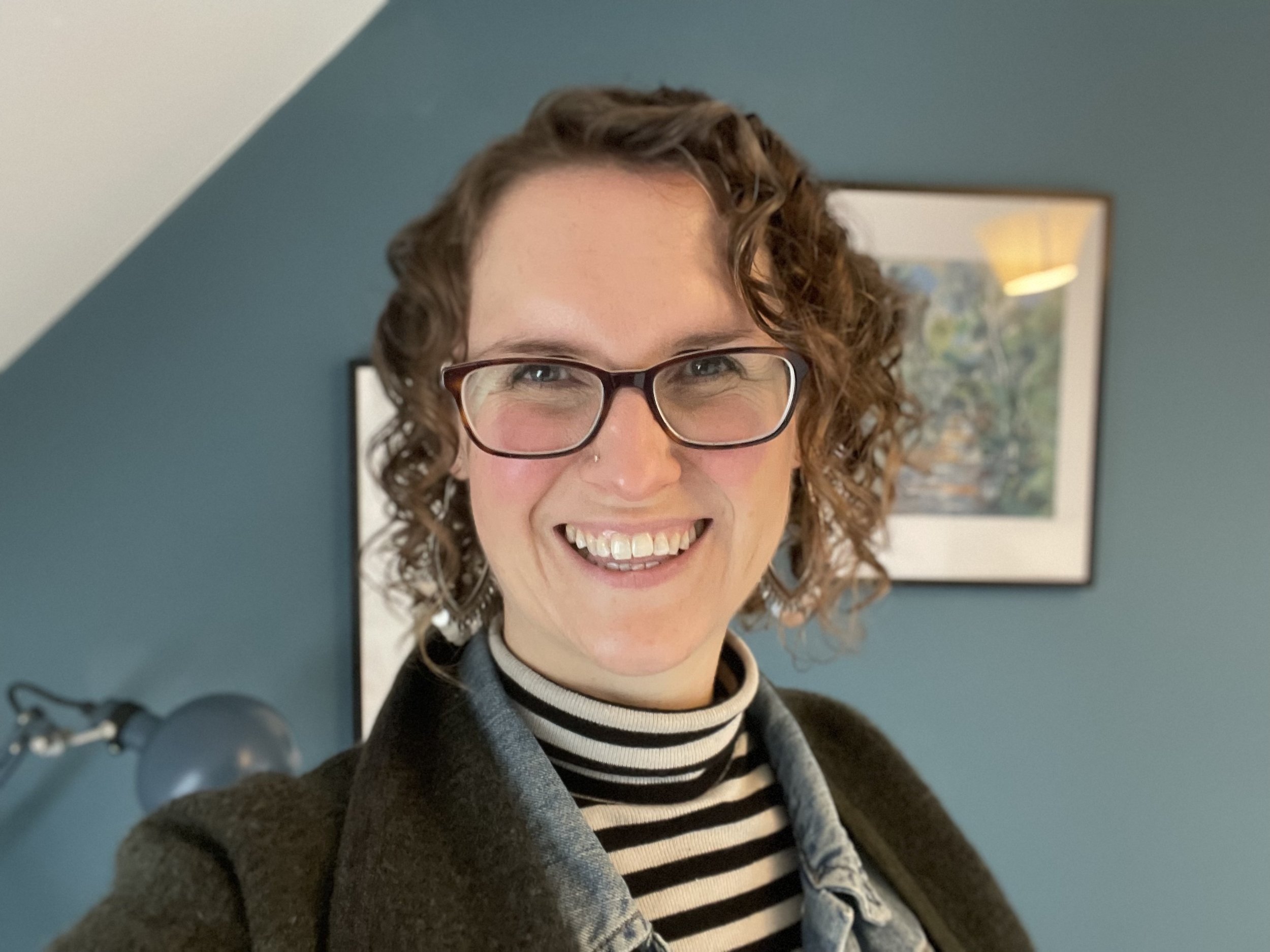
Laura Simmonds is a BACP registered counsellor, qualifying with a Diploma in Therapeutic Counselling through CPCAB in 2017 and working as a therapist for nearly 10 years.
Laura’s work is LGBTQ+ affirming, neurodivergent affirming and trauma-informed, and she regularly undertakes additional training to deepen her understanding in LGBTQ+ affirmative practice, trauma-informed therapy and neurodiversity-affirming approaches. You can find out more about the courses she’s recently taken on the About Me page.
Alongside Laura’s professional training, she is also neurodivergent, which gives her both a professional and personal understanding of the experiences many people bring to therapy.
Laura Simmonds is a registered member of the British Association for Counselling and Psychotherapy (mBACP 380846) and works within their Ethical Framework, which helps ensure therapy is safe, professional and respectful.
Practical Details
Finding the right therapist is important.
That's why I offer a free 15-minute phone consultation. It's an opportunity for us to briefly talk about what you're looking for, ask any questions you may have and see whether working together feels like a good fit.
There is no obligation to book further sessions afterwards.
Although I'm based in Tonbridge & Tunbridge Wells, Kent, many of my clients are based across the UK including London and the South East. Online therapy means you can access support from the comfort of your own home, wherever you're based.
Individual counselling sessions cost £68 per session.
Please get in touch if you have any questions about availability or fees.
Get in touch by clicking ‘Contact Me’ (or hit the button below) and sending me a message on the contact form.
If you’re not sure what to write, saying something as simple as ‘I’m interested in starting therapy’ is enough.
I aim to reply to you within 1-2 days.
We’ll arrange a time to talk on the phone for 15 minutes, which gives us the chance to chat about any questions you may have and check to see if we’re a good fit. This consultation is completely free.
If you would like to, we can then arrange to start therapy sessions at a regular day and time each week.


Taking the First Step
Reaching out for support can feel daunting, especially if you've spent a long time trying to manage things on your own.
You don't need to know exactly what to say when you get in touch.
A simple message saying, "I'm interested in therapy" is enough.
I’d love to hear from you.
You might also find these pages helpful…
Many people find that anxiety doesn't exist in isolation. It can be shaped by the experiences we've had, the environments we've lived in and the ways we've learned to navigate the world.
If thats you, you may also find these pages helpful:
LGBTQ+ Affirming Therapy
Questioning or exploring your sexuality or gender, navigating relationships, or living in environments where you haven't always felt accepted can all affect your wellbeing. You deserve a space where every part of you is welcome.
Anxiety, Overwhelm and People Pleasing Counselling
Support for anxiety, overwhelm, overthinking and people pleasing, helping you understand yourself with compassion rather than self-blame.
Learn more about Anxiety, Overwhelm and People Pleasing Therapy→


Read the Blog