

Person sitting on the grass in the sunshine
Last week, someone was telling me how they tried to come out to a friend about being non-binary.
They were sitting on the grass in the sun, chatting about their friend’s latest crush.
She looked up and asked ‘so…are you into anyone at the moment?’
There was a pause as they thought, ‘This is it! I’m going to tell her…’
And then, the words just disappeared.
It brought back so many memories of my own coming out journey, trying to tell friends and family.
Feeling your heart beating louder, cheeks feeling warmer, the words start forming in your head ‘I need to tell you something actually…’.
Then your tummy flips, acid rising, blood rushing to your head.
Your brain goes blank. You find yourself saying ‘ummm…’
And then the moment has passed.
You feel a rush of relief as the adrenaline subsides.
But then frustration kicks in. Why couldn’t I just say something? Other people can be open about their sexuality…why cant I?!
So why do the words disappear?
You’re not doing anything wrong.
If we break it down, there’s actually a pattern you’re following – one that most of us in the LGBTQ+ community have experienced at one point or another.
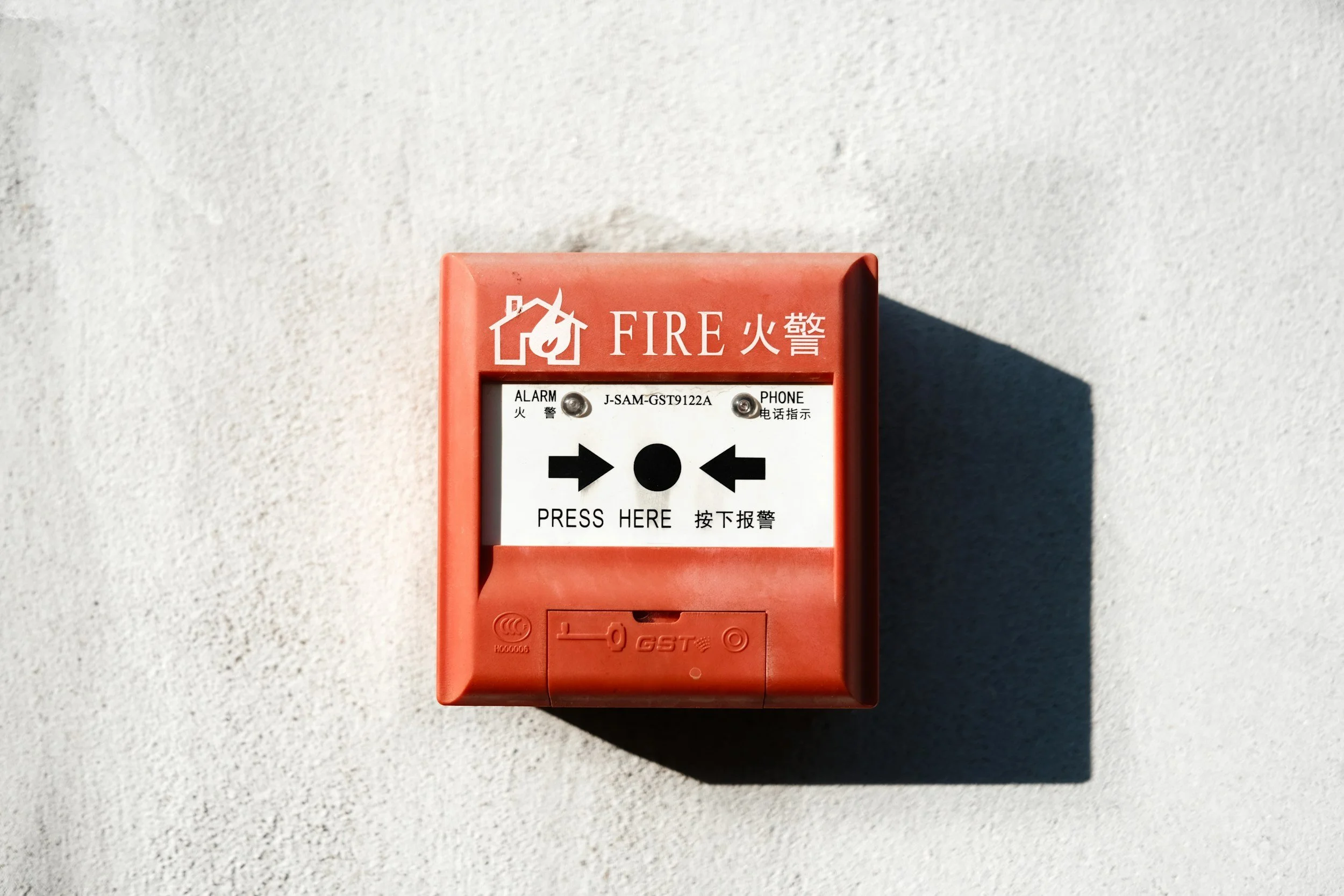
Red fire alarm on white wall
In your brain, there’s a fire alarm, which is constantly scanning for threat.
Beep. Beep. Beep.
Coming out is scary so…the moment you’re about to say the words that alarm starts ringing.
It floods your body with hormones like adrenaline and cortisol. These tell our nervous system to go into threat mode.
Our heart rate increases.
We can feel hotter or colder.
We might feel a rush of anxiety or maybe anger.
Our brain goes foggy and we start shutting down.
Finding words gets really hard because our threat system actually switches off our brain’s speech and language centre.
Words that were there a few seconds ago just disappear.
This pattern that’s playing out is actually your biological response to something that’s overwhelming or dangerous.
It’s your nervous system’s way of protecting you.
So why does this make sense?
We live in a world where being LGBTQ+ is not safe.
While there may be many more safe, accepting places and people, we are surrounded by - and grow up with - coded messages that being queer means being different and being different makes you a target.
Alongside the massive growth of serious and dangerous physical and political attacks on trans people, other forms of queerphobia are also on the rise as LGBTQ+ rights are being eroded and hate speech given space by the main stream.
Being out about our sexuality or gender is far from safe or straight forward.
So you aren’t doing anything wrong. You’re not failing or messing up.
Without any conscious choice, your body is making the decision for you because coming out is scary, unknown and vulnerable – even more so in our current climate.
One small change you could try
This isn’t about coming out suddenly becoming super easy, although I wish I could wave a wand and make that happen.
But it is about finding a way to feel safe enough with the person you want to tell, that the words don’t disappear.
Before you have that conversation, try this:
Close your eyes, take a deep breath, feel your feet on the floor. Remind yourself coming out is hard and it’s normal that your threat system wants to protect you.
Often just giving ourselves this message can calm our threat system enough that you can say the words.
But if your threat system does kick in and you still find the words disappearing, it’s ok.
Remind yourself, ‘I’m not doing anything wrong. Coming out is daunting at the best of times and dangerous at the worst…my threat system is just protecting me’.
Its not a miracle cure but hopefully by knowing that your threat system is just doing its job, it might feel less frustrating, less stuck, more kind.
If you’d like to talk about any of this or get more support with coming out – or with your journey to understand your sexuality or gender – I’m here to help and I’d love you to get in touch.